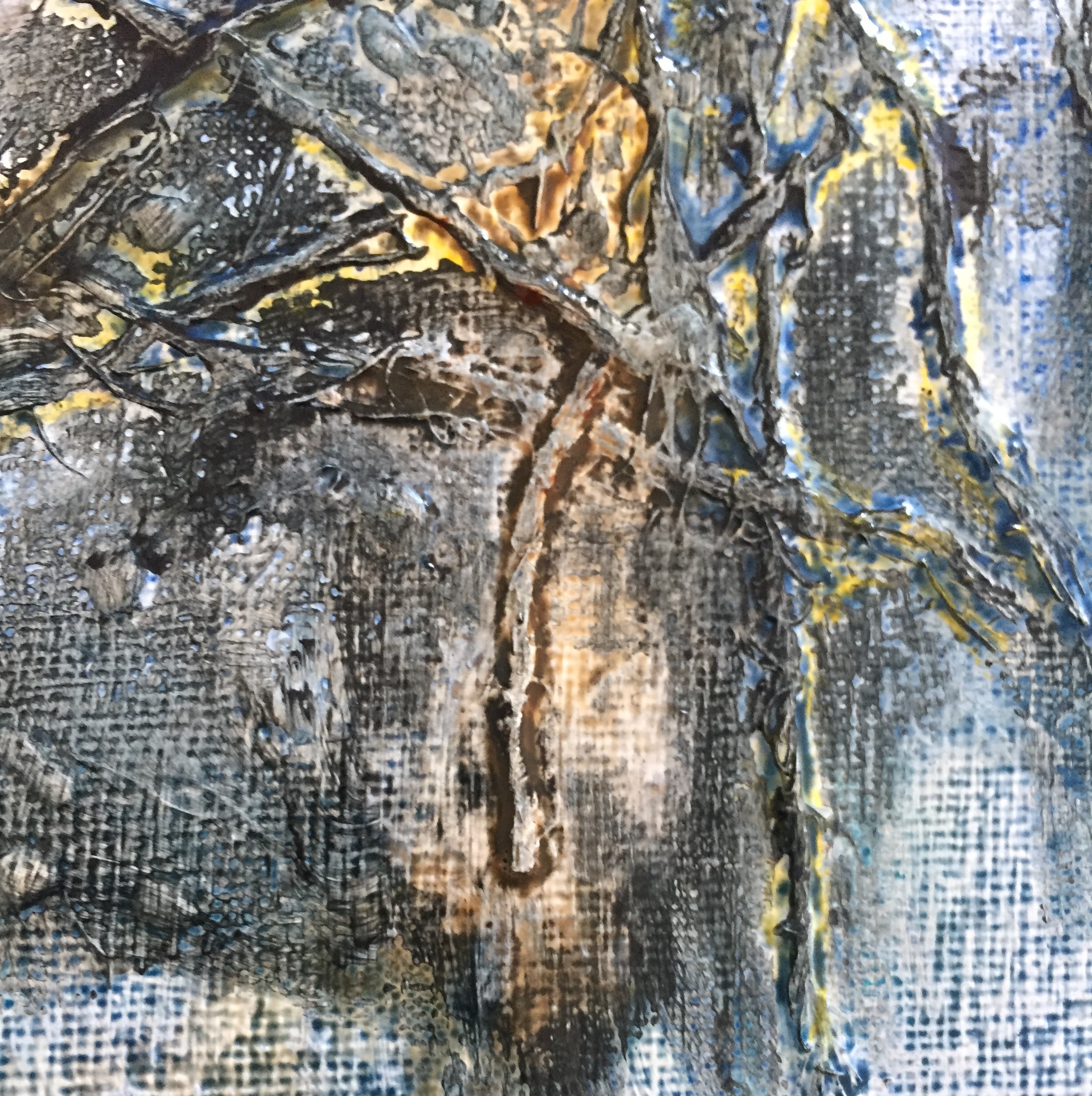
I love exploring what happens when wet paint spreads across a surface. Today I was working on this small canvas panel.
I had prepared the surface by collaging some twine into the gesso. It made a miniature landscape on which the paint moved...
I love exploring what happens when wet paint spreads across a surface. Today I was working on this small canvas panel.
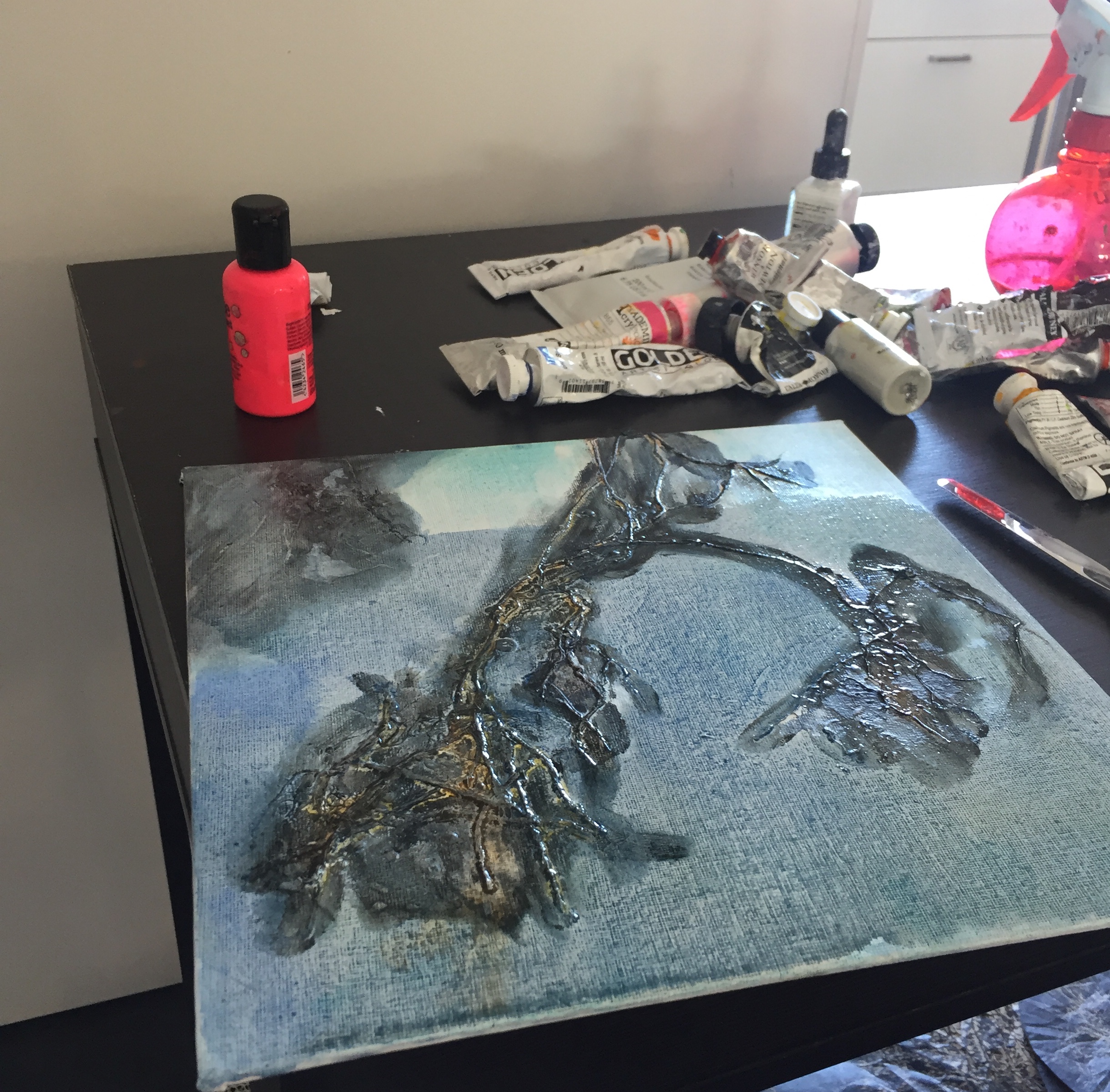
I had prepared the surface by collaging some twine into the gesso. It made a miniature landscape on which the paint moved...
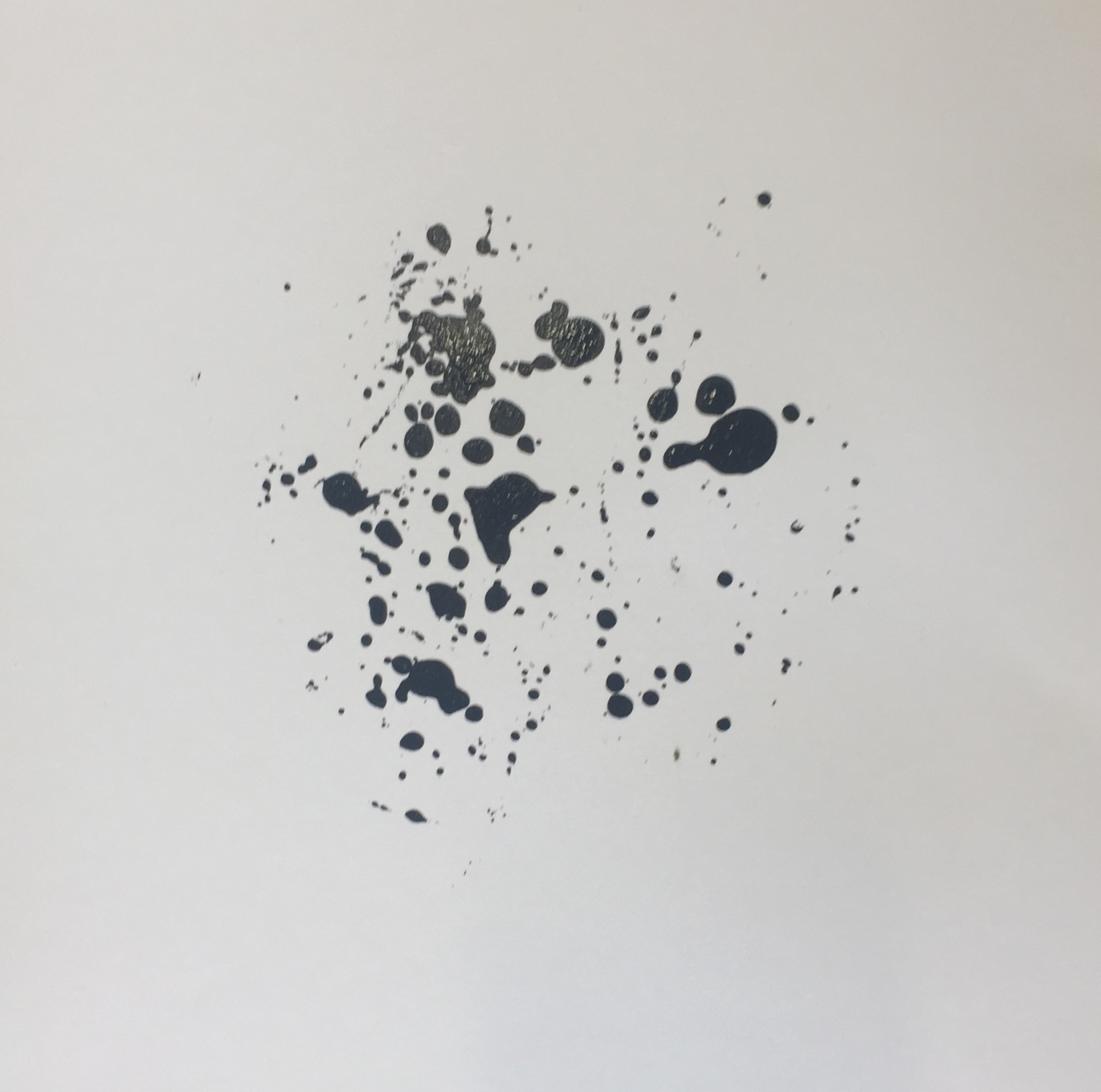
Adding a splodge of black to an ongoing painting, I found a bird...

I painted more splodge-birds and gave them red eyes

I don’t know why and I don’t know if they’ll stay, but it was interesting to meet them on the paper...
dynamic painting is like that
And sometimes… a visit to the gallery doesn’t work, and you’re better off in the soft play area in the foyer! It is hard work taking toddlers to galleries. At that age, they resist being corralled and held back, while still too young to imagine how their movements might affect other people. Instead, the adult has to do this empathy work while diverting the child to less noisy or disturbing activities.
Naya at 21 months enjoyed walking on the beautiful wooden floor of Christchurch Art Gallery and being in the wonderful starry lift. What spoiled our visit was a warning from an over-cautious attendant not to touch anything, and being followed to check we behaved ourselves – I would like to have been trusted not to let her cause upset or damage.

just walking
Later, she had fun climbing (quietly and gently) on and off the (empty) sofas, but the best I could manage in terms of looking at art was to direct her attention to paintings with ships or grapes, in between climbs. She paid most attention to another visitor who was looking at the paintings, copying her stance with hands clasped behind her little back and feet apart. She’s learning what people do in art galleries…
She was scared by a contemporary exhibition with life-size figures, but quite intrigued by the shapes and colours in some of Gordon Walters paintings, and started to look at patterns – “blue square!”

with Gordon Walters
We then retired to the soft play area, where she made towers of bricks. It was good fun but it was placed far from any artworks, and we could have been in a supermarket.
This less-than-successful visit made me think about how galleries might learn from and encourage toddlers’ openness to art. If I take Naya to the swimming pool, we are made to feel welcome, with free entry, a family changing room, and a warm shallow pool that works for her size, plus lessons if we want them. I wondered what the equivalent might be for experiencing art…
How about a time in the week when little people are especially welcomed into the gallery with their responsible adult, who is also welcomed and given suggestions for how to direct the child’s attention and talk about the art? Other visiting adults would know what to expect during that time; some might even enjoy sharing the pleasure and delight of children being excited by art.
During this time slot, toddlers could move around in their own way, fast or slow – having just mastered walking, they are still intrigued by the sound of their shoes on hard floors and excited by the wide open spaces of public galleries.
Some artworks might be chosen each week for special looking, with some kind of steps and little viewing platform so that toddlers can get to see the paintings at their eye-level and fully experience them. Postcards of these ‘paintings of the week’ could be provided for children to take home and continue looking at.
The lovely soft play area could be positioned inside a gallery so that there’s more chance of something ‘catching the eye’ and being talked about. Less valuable, but still interesting, paintings might be hung in the café (as is done in the Friends’ Room in the Royal Academy, London), and in educational spaces where toddlers come for activities organised by outside groups.
Visual art is for looking at, for everyone to look at, however small they are.


Robin was 4 years old when she visited an exhibition of my paintings in the Freie Universität Berlin. I had tried to make the experience of looking at paintings as comfortable and relaxing as possible, with cushions on the floor and chairs to sit in.

She was particularly attracted to the painting at the top right of the photo, and responded to it with a picture of her own:
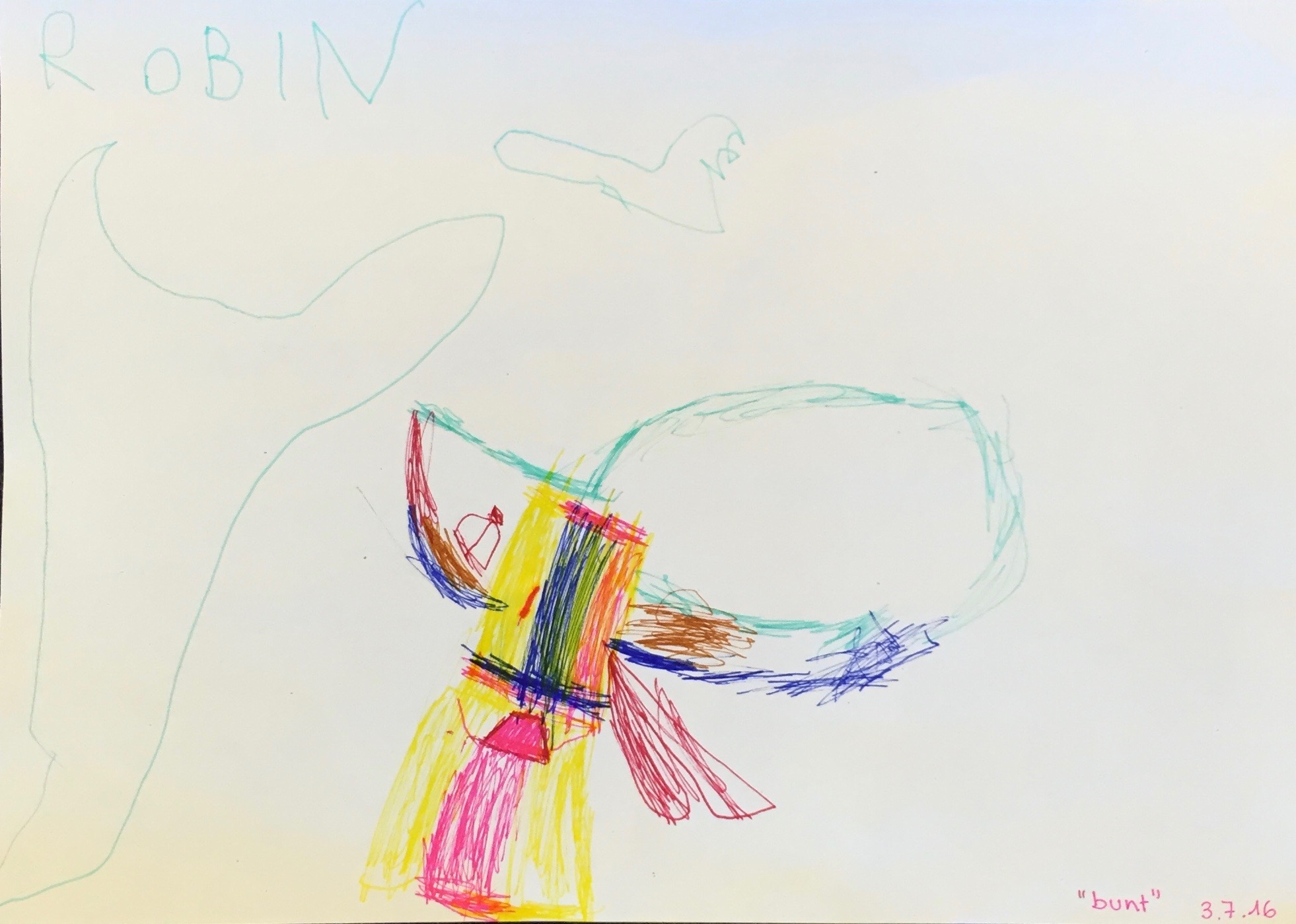
colourful , felt pen on paper, Robin A. 2016
I can see that she looked at the colours, shapes and composition of my painting. More exciting than that, it feels as if she also responded to the emotions expressed in it.

Lighter. Acrylic on paper, Lynne Cameron, 2016.

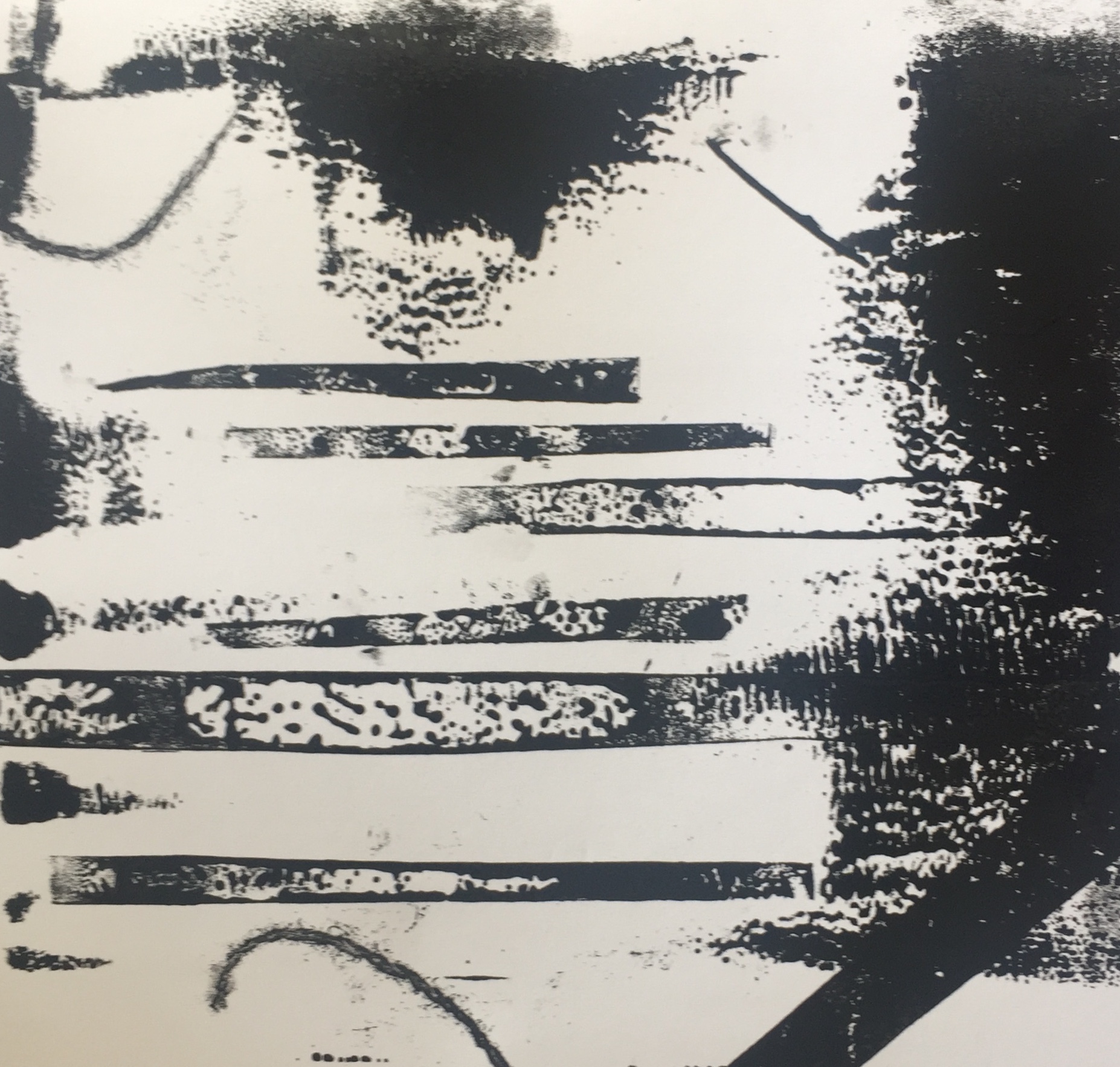
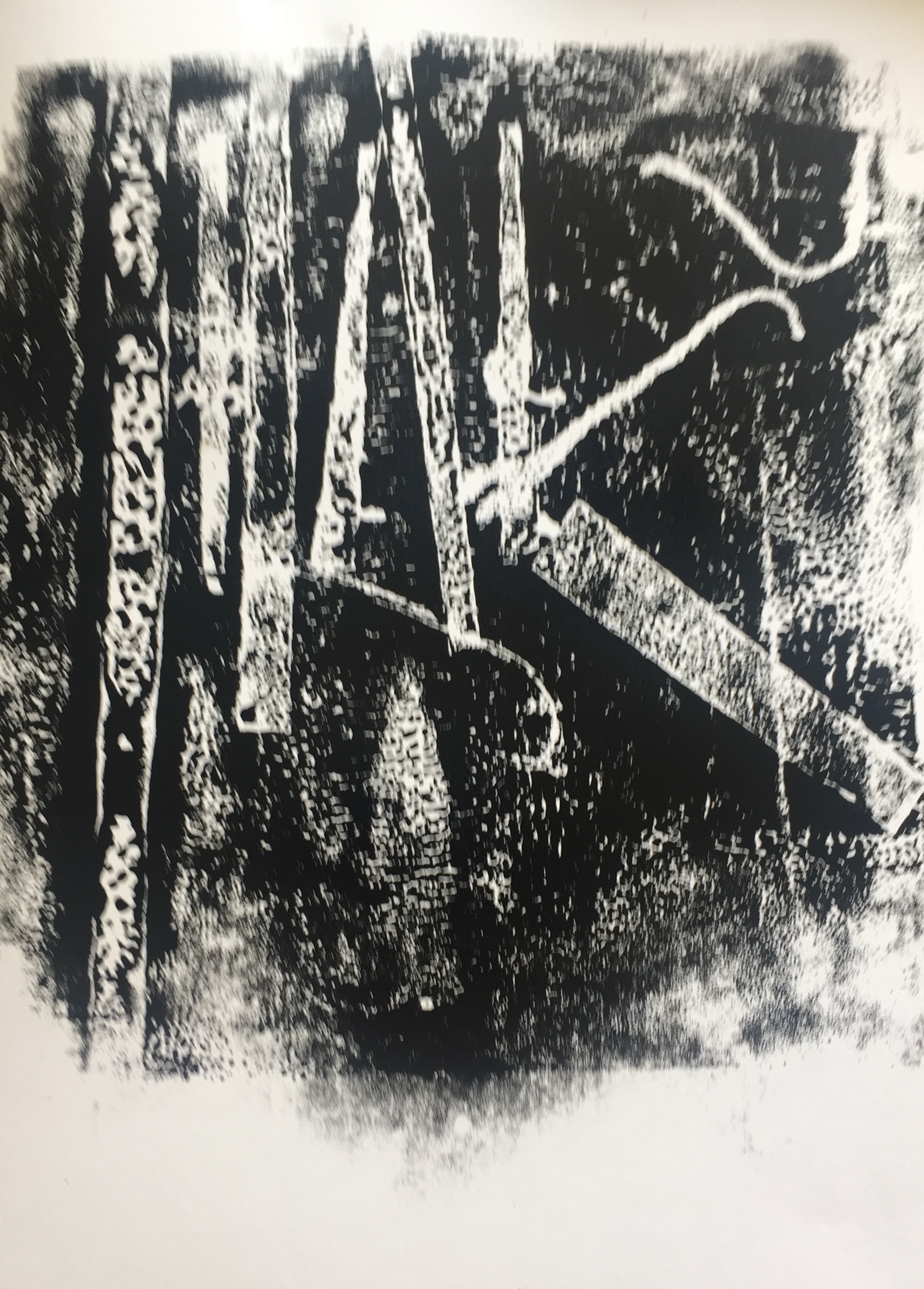
Explorations in monoprinting Lynne Cameron February 2019
Thoughtful talk with a noticing adult can open a door to deeper looking for child visitors to exhibitions.
In the previous post, I wrote about letting the child lead the visit. It’s the adult, though, who leads the talk, taking a dual focus - on the child and on the painting. Older children can tell you why they stopped at this particular painting. With a very young child like Naya, I have to guess what attracted her attention, and then I can offer it back to her with more talk.
The conversation starts from the child’s interest, and takes it further. Here’s an early Patrick Heron painting I saw in St Ives last spring and some imagined child-friendly talk around it.

Patrick Heron, St Ives Window with Sandbar. As seen as Tate St Ives, May 2018.
Did you see the fish? Yes, there’s two, on the white table. Can you see another one?
can you find a chair in the painting?
It’s called St Ives Window - what can you see through the window?
Perhaps the painter was sitting inside looking out through the window like we did yesterday when it was raining.
look at the blue - here, and her, and here. So many different blues!
and there’s a bright red line. Let’s find some more red lines. Some down here and some up there.
It’s like a square, isn’t it? Do you think that’s the window? Or maybe these black lines are the window frame?
There are lines going up and down, and lines going across.
Look, here’s another painting through a window…
Here’s a list of some of the many things adults can talk about with the child:
details and stories to connect the painting to our lives
what the painting shows us
o objects and landscapes
o colours and change of colour
o shapes
o scale
o light and shade
o lines and diagonals
the title of the painting and what it might suggest
the making of the painting and how it shows on the surface
o brush marks
o how lines cross or avoid each other or create distance
o how colours overlap or merge
o what happens at the edges
o unpainted areas
our responses to the painting
o where it takes us (metaphorically)
o how it makes us feel
o the parts that ‘speak’ to us and the parts that don’t
o what might happen beyond the painting frame
how the painting connects to others, in the exhibition or remembered
· tbc
© Lynne Cameron 2019
·
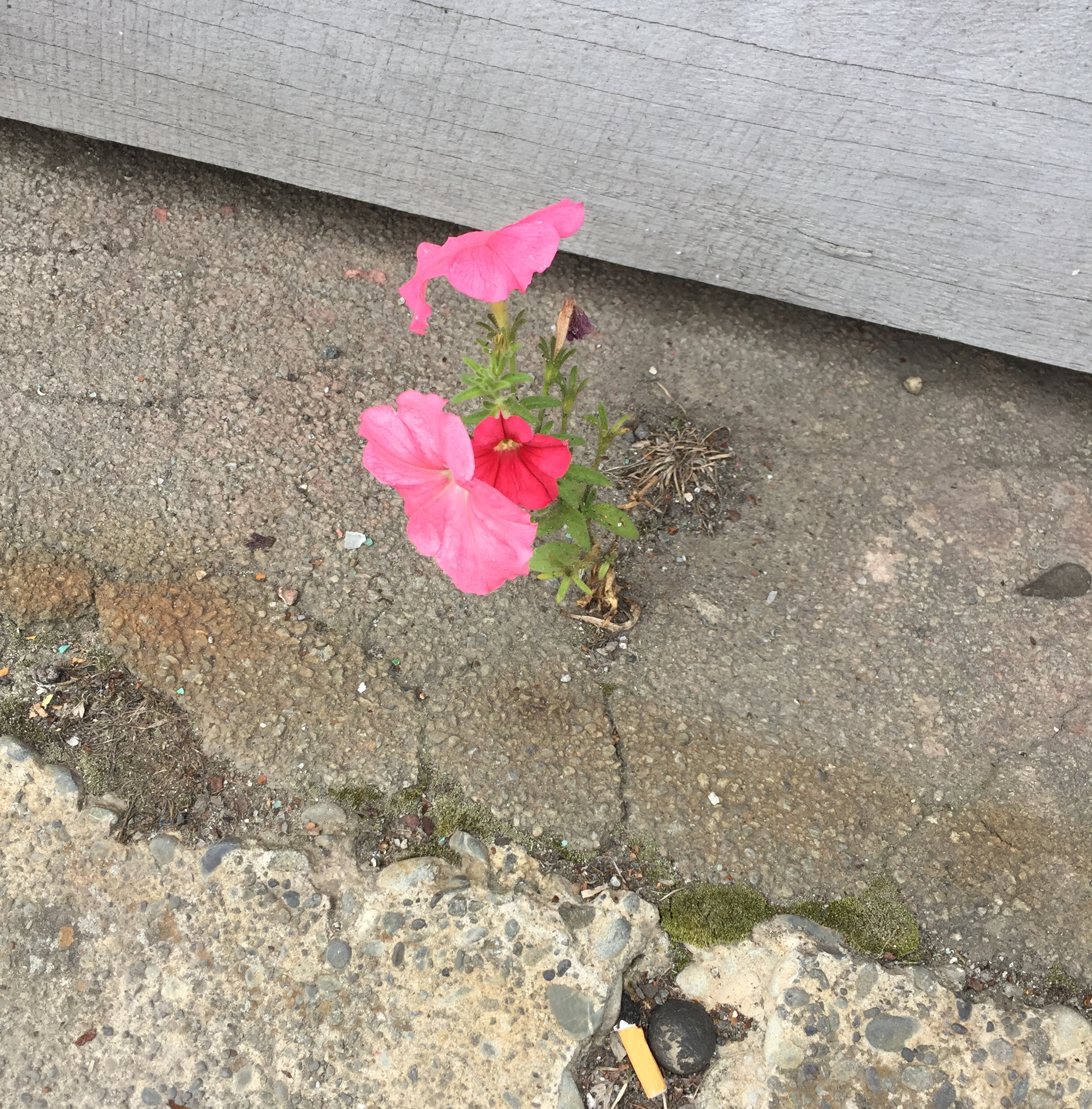

Notice, follow, and deepen - the same rule applies whether the child’s attention is on play doh or art
Our first visit to Christchurch Art Gallery, when Naya was 15 months old, was a delight. She toddled around the almost empty gallery, enjoying the wooden floor under her feet. Every now and then, she’d stop and point at a painting, saying “da”. I’d take this as a prompt to lift her up to see the painting at her eye level and start ‘discussing’ it with her. We did this 5 or 6 times on that visit – that was enough to make the visit a pleasure to be repeated, with both of us enjoying our interaction.
We paced ourselves in a rhythm of physical activity and talk, led by the child’s attention:
walk – stop – lift to look – talk – walk
I chose the gallery but Naya then wandered at her own speed. As adults we find some pictures more interesting than others, and there’s no rule that says we have to look at each in turn. It is the adult’s job is to notice when a particular painting catches the child’s eye, and then follow their interest, going deeper through talking.
By lifting Naya up from the floor, I was doing two important things. First, her eye level came to middle of the painting so she could look at the whole of it as the artist intended. If she had looked up from the floor, she would have seen a distorted version – try sitting on the floor and looking up at one of the pictures on the walls in your house to get a toddler’s-eye view. Second, by gently holding her and talking quietly, I was supporting her attention and her looking, for longer than she could have maintained it herself.
tbc
Back in May when I was sitting looking at Patrick Heron paintings in the Tate St Ives, I couldn’t help overhearing some of the things adults said to their children:
Which one do you like?
What colour is that?
Can you see the ball in the picture?
That picture is bigger than you, isn’t it?
This started me thinking more about why we take children into art galleries and what we expect them to get from their experience. These questions lead the children to think about their emotional response, to look for something they recognise, to name and label, to see paintings as objects. While any of these might be fun or interesting, they could be asked in the shopping mall or playground. How do we help children look more deeply at artworks?

Naya, aged 9 months, with her father, looking at Here they come, acrylic on canvas, Lynne Cameron.
Naya is now 21 months and has been looking at this painting of mine since she was a tiny baby. She passes it on the stairs and greets in the morning, says good night to it on the way to bed.
When I carry her, we stop by it, and I talk about it, trying to extend her looking at the abstract painting in terms of colour / shape and movement / light and dark – and how it makes us feel.
Do you like that green circle?
Look, here’s another green circle. A little one. And here’s a big big one, going off the edge.
And what’s in the middle? Yes, it’s blue.
Where’s the pink? The pink goes all the way to the edge… into that dark shadow.
I like this white dotty part Which bit do you like?
The aim is for Naya to experience a combination of interest, growing familiarity, and deepening attention that is a great start to her looking at art.
tbc

This painting was the final artwork, in which the dead tulip petals became part of a collage and suggested the swirling shapes of the paint applied on top. Sold to a private collector.
Almost exactly three years ago, I bought a bunch of tulips at the Winterfeldplatz market in Berlin. The tulips made art in several ways. As tulips will, they shaped and reshaped themselves over the next week. They cast intriguing shadows in my studio/kitchen. They began to die and became even more beautiful as the petals fell. I put together the photos of their living and dying: